A lush garden does not have to be a thirsty one. These water-wise gardening principles help Pune homes and societies keep landscaping beautiful while slashing water use, tanker costs and effort through smarter choices.
What water-wise gardening means
Water-wise gardening is the practice of designing and maintaining a garden so it stays healthy and attractive while using as little water as possible. It is not about a bare, cactus-only yard; it is about matching plants, soil and watering methods so almost nothing is wasted.
For Pune, where summers are hot and dry and many societies pay for tanker water, a water-wise approach protects both the landscape and the budget without giving up greenery.
Choose the right plants
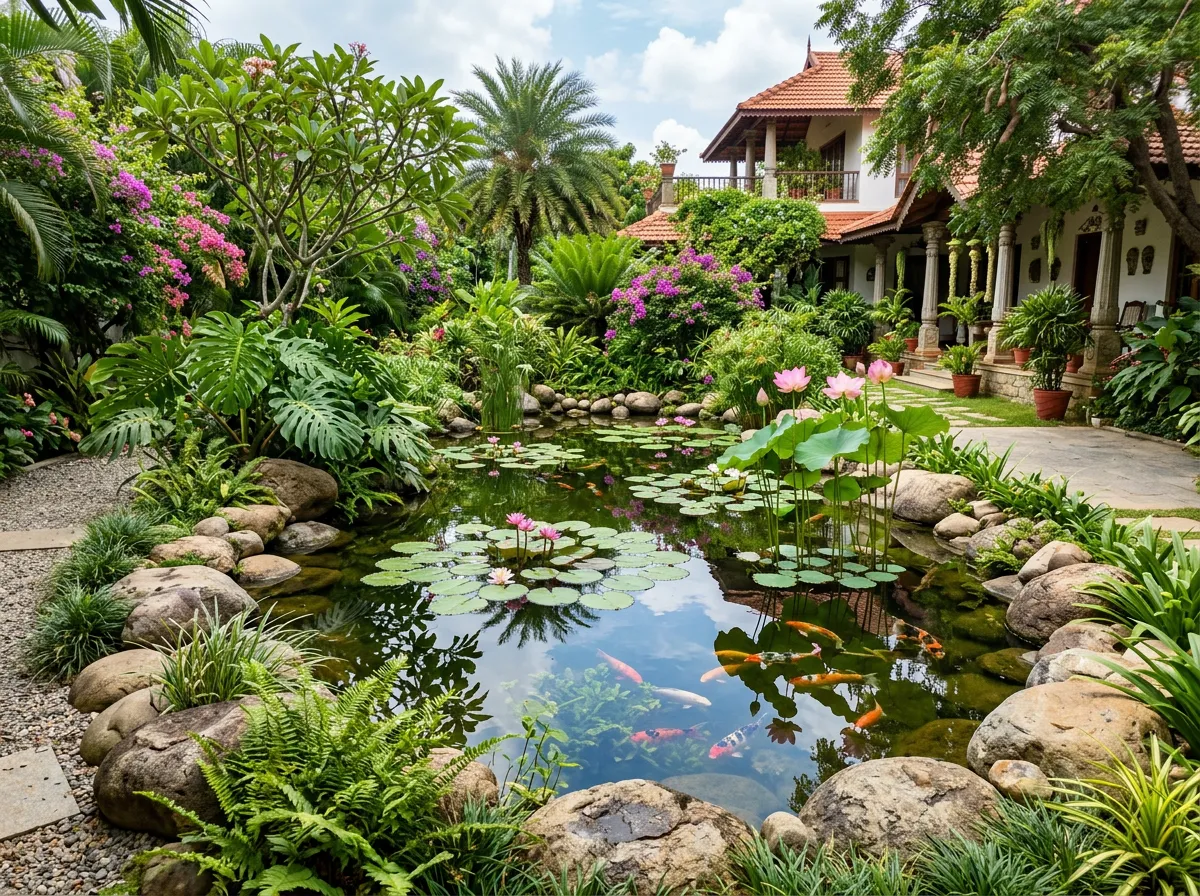
The single biggest water saving comes from planting species suited to Pune's climate rather than thirsty exotics. Native and drought-tolerant plants have evolved to handle long dry spells and need far less irrigation once established.
Grouping plants by their water needs, an idea known as hydrozoning, means you never overwater the tough plants just to keep the thirsty ones alive.
- Prefer native and drought-tolerant species that thrive in Pune with minimal watering.
- Group plants with similar water needs together so each zone gets only what it requires.
- Limit large thirsty lawns; use hardy ground covers or paving where a lawn is not essential.
- Choose the right plant for each spot, matching sun, shade and soil.
Water smart, not more
How and when you water matters as much as how much. Watering early in the morning or in the evening cuts evaporation dramatically, and deep, less frequent watering encourages roots to grow down and become more resilient.
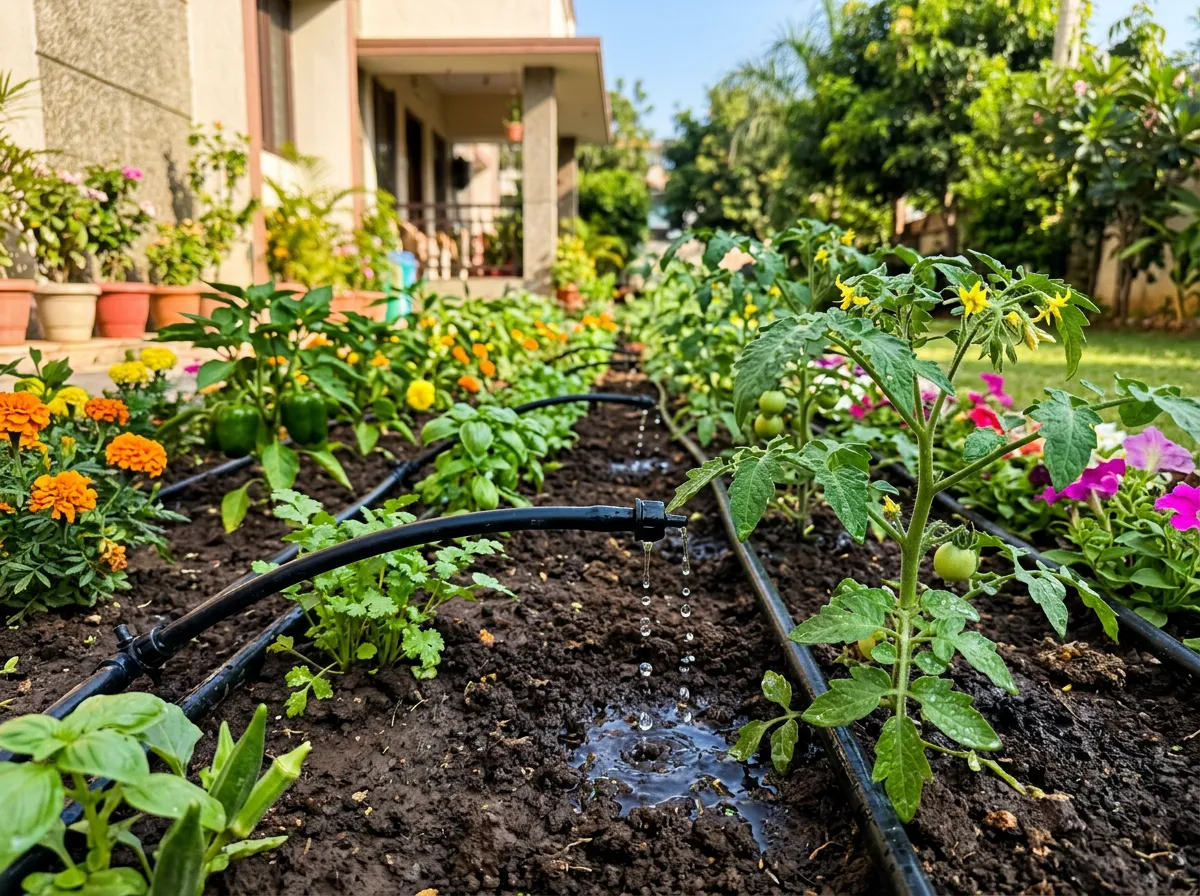
Swapping sprinklers and hoses for targeted delivery is where the real efficiency lies, because it puts water exactly where the roots are.
- Water in the early morning or evening to reduce evaporation losses.
- Water deeply and less often to build deep, drought-resistant roots.
- Use drip irrigation to deliver water straight to the root zone.
- Add a timer or a soil-moisture sensor to avoid watering when it is not needed.
Mulch, soil and reuse
A layer of mulch over the soil is one of the most effective water-savers there is: it slows evaporation, keeps roots cool, and suppresses weeds that would otherwise compete for moisture. Improving the soil with compost helps it hold water for longer too.
Finally, pairing these habits with harvested rainwater and treated or greywater reuse means much of the garden can be watered without touching the fresh-water supply at all.
- Spread organic mulch around plants to cut evaporation and weeds.
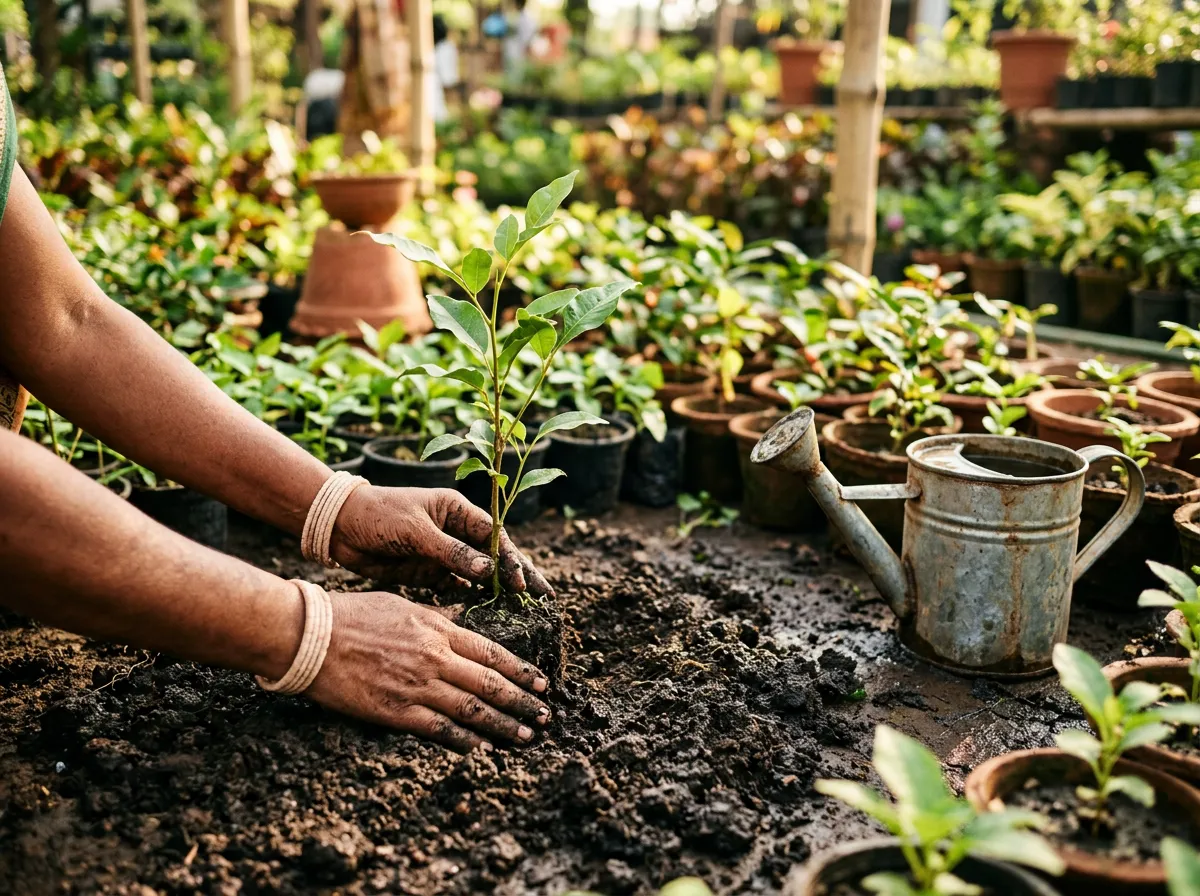
- Enrich soil with compost so it retains moisture better.
- Use harvested rainwater for irrigation during and after the monsoon.
- Reuse greywater or treated water for non-edible landscaping.
Need help from a Pune gardening expert?
Get a free on-site consultation and quote from the Gardenist team.
Frequently Asked Questions
Related Gardenist Services
Ready to act on this? These services put it into practice across the Pune region.