Drip irrigation delivers water drop by drop straight to plant roots, saving water and effort while keeping plants healthier. This complete guide covers how it works, what it is made of, and how to run it well in Pune.
How drip irrigation works
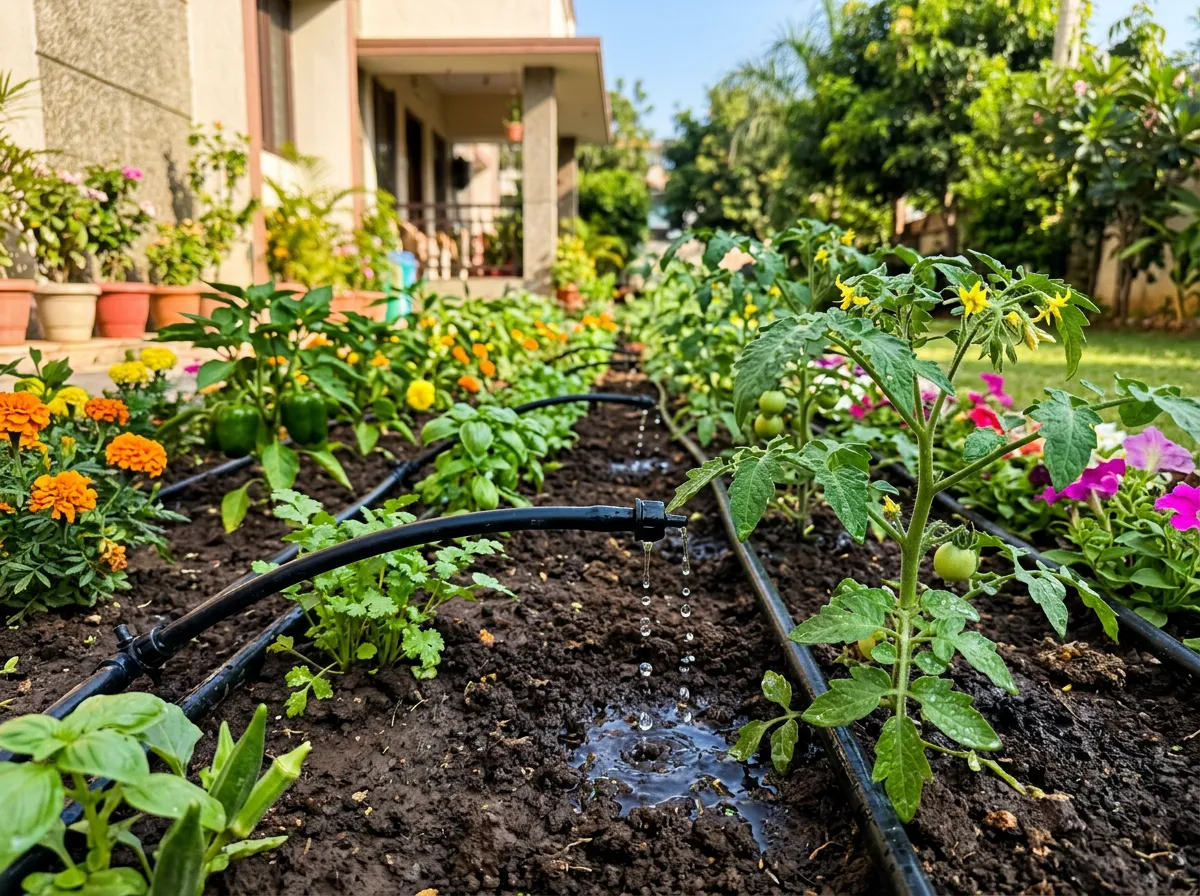
Drip irrigation delivers water slowly and directly to the base of each plant through a network of tubes and small emitters, rather than spraying it across the whole area. Because the water goes straight to the root zone and soaks in gradually, very little is lost to evaporation, wind or runoff.
That precision is why drip is the most water-efficient way to irrigate a garden, and why it suits Pune's climate so well, keeping plants steadily hydrated even through hot, dry spells while using a fraction of the water a sprinkler would.
Why choose drip over sprinklers or hoses
Compared with hand-watering or overhead sprinklers, drip is more efficient, more consistent and less work. It also tends to produce healthier plants, because the foliage stays dry and the soil stays evenly moist.
For a society or a large home garden, automating drip removes the daily chore of watering entirely.
- Saves water by cutting evaporation and runoff, often dramatically versus sprinklers.
- Keeps leaves dry, reducing fungal disease and leaf scorch.
- Suppresses weeds by wetting only the plants, not the gaps between them.
- Automates easily with a timer, so watering happens reliably without effort.
The main components
A drip system is a simple assembly of parts, each with a clear job. Understanding them makes it easy to design, expand or repair a system.
Water flows from the source through a filter and, if needed, a pressure regulator, then along the main and sub-main lines to the drip laterals that carry the emitters.
- Water source and pump: the supply, whether municipal, a tank, harvested rainwater or treated water.
- Filter: essential to stop grit and particles clogging the tiny emitter openings.
- Pressure regulator: keeps flow even across the system regardless of source pressure.
- Main and sub-main lines: distribute water to the different zones of the garden.
- Drip laterals and emitters: the small tubes and drippers that release water at each plant.
- Controller or timer: automates the watering schedule for each zone.
Layout and installation tips
A good layout matches emitter spacing and flow to the plants and soil. Closely spaced plants and beds suit inline drip tubing, while individual shrubs and trees do well with point emitters sized to their needs.
Dividing the garden into zones lets you water lawns, beds and pots on schedules that suit each, and keeps pressure consistent across the system.
- Match emitter flow rate to your soil so water soaks in without pooling.
- Zone the garden by plant type and water need for independent scheduling.
- Lay laterals along plant rows and place emitters at the root zone.
- Include a flush valve at line ends so the system can be cleaned out.
Keeping a drip system healthy
Drip systems are low-maintenance but not no-maintenance. The most common problem is clogging, so cleaning the filter and periodically flushing the lines keeps the water moving freely, especially when running harvested or treated water through the system.
A quick seasonal check for leaks, blocked emitters and correct pressure keeps everything efficient, and pairing drip with rainwater or treated water makes an already frugal system even more sustainable.
- Clean the filter regularly and flush the lines to prevent clogging.
- Inspect for leaks, damaged tubing and blocked emitters each season.
- Check that pressure and flow are even across all zones.
- Combine drip with harvested rainwater or treated water for maximum savings.
Need help from a Pune gardening expert?
Get a free on-site consultation and quote from the Gardenist team.
Frequently Asked Questions
Related Gardenist Services
Ready to act on this? These services put it into practice across the Pune region.