Treated water from your STP or greywater system can irrigate the entire landscape instead of going to waste. Learn what quality is safe, which plants suit it, how to deliver it, and how much Pune societies can save.
Reusing treated water for irrigation: the basics
Every day a housing society or industry treats thousands of litres of wastewater to a clean standard, and much of it can be put straight to work irrigating lawns, hedges, trees and flower beds. Reusing treated water for the garden is one of the simplest and highest-value forms of water recycling available to a Pune property.
Instead of discharging treated output or buying tanker water for the landscape, the two flows are matched: the plant produces clean water daily, and the garden consumes water daily. Closing that loop is efficient and visibly sustainable.
Is the water quality safe for plants?
Properly treated STP water is generally well suited to landscape irrigation. The key parameters to watch are the organic load, suspended solids, salinity and any residual disinfectant, all of which should sit within the reuse norms before the water reaches the plants.
Because treated water often carries some nutrients, it can even act as a mild fertiliser for ornamental planting. The main caution is salinity building up in the soil over time, which good practice manages.
- Confirm the treated water meets irrigation reuse standards through regular testing.
- Use it on lawns, shrubs, trees and ornamental beds rather than on edible crops.
- Watch soil salinity and flush occasionally with rainwater or fresh water.
- Ensure disinfection is adequate but not so heavy that residual chemicals harm plants.
Choosing plants and delivering the water
Hardy, salt-tolerant ornamentals, native species and robust ground covers cope best with treated water, and they keep the landscape resilient. Pairing the source with the right delivery method makes the reuse both safe and frugal.
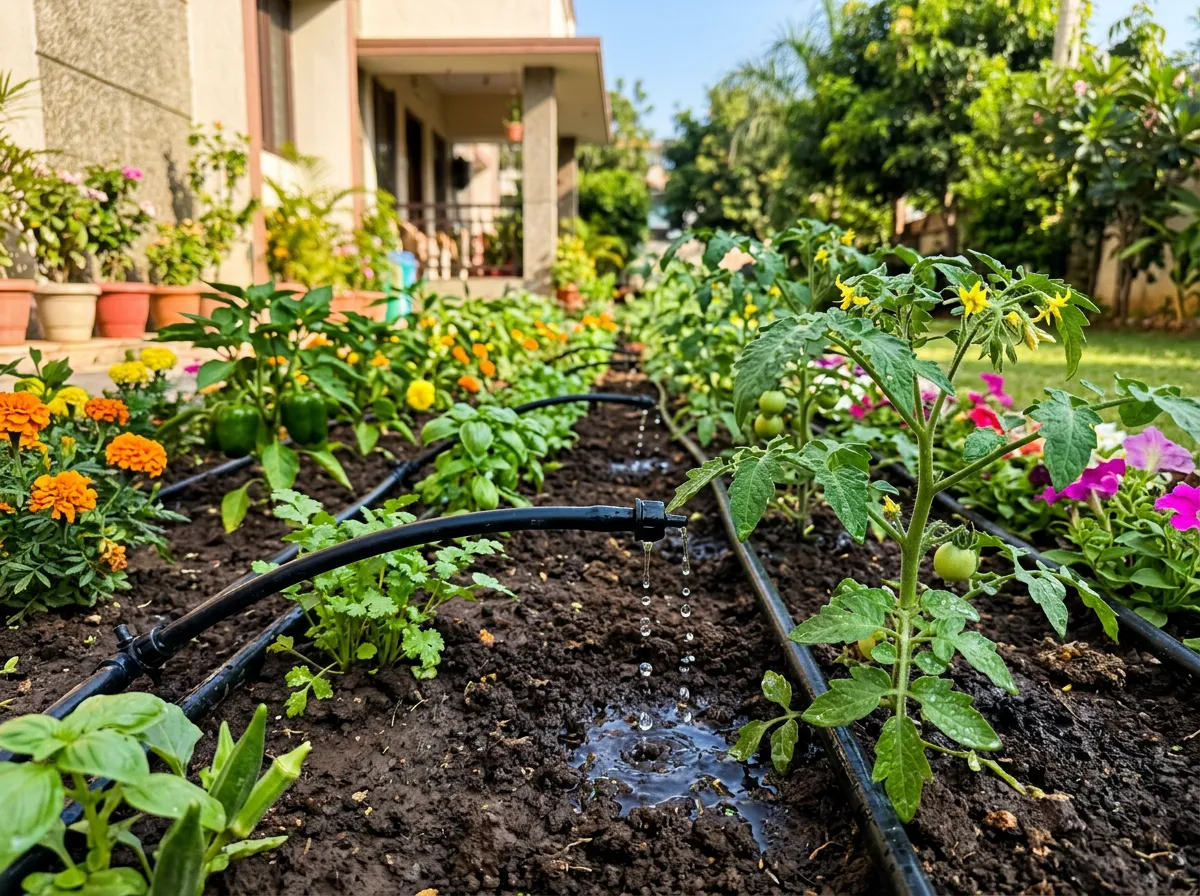
Sub-surface and drip delivery keep the water at the root zone, minimise contact with foliage and people, and cut evaporation losses, which is why they are preferred for treated-water reuse.
- Favour native and salt-tolerant species for the areas fed by treated water.
- Use drip or sub-surface lines rather than overhead sprinklers.
- Keep treated-water irrigation away from edible plants and play areas.
- Zone the garden so sensitive plants can still receive fresh or rainwater.
Infrastructure and savings
Reuse needs a little plumbing: a storage tank for treated water, a pump, and a separate distribution line clearly marked as non-potable so it is never confused with drinking supply. Once in place, it runs quietly in the background.
The payoff is real. A society that irrigates its landscaping and even feeds flushing from treated water can offset a large share of its fresh-water purchases, which in Pune's summer means far fewer tankers and a healthier budget.
Need help from a Pune gardening expert?
Get a free on-site consultation and quote from the Gardenist team.
Frequently Asked Questions
Related Gardenist Services
Ready to act on this? These services put it into practice across the Pune region.