Planning a sewage treatment plant for your Pune society? This guide explains STP technologies, how to size a plant in KLD, running costs and how treated water can be reused for gardens and flushing.
Why an STP for a housing society matters
A sewage treatment plant, or STP, treats all the wastewater generated by a residential complex so it can be safely reused or discharged instead of loading the municipal sewer or polluting local water bodies. For societies across Pune and Pimpri-Chinchwad, an on-site STP is not just good practice; for larger projects it is a legal condition of occupancy.
A well-run plant turns a daily liability into an asset. The treated output can flush toilets, wash common areas and irrigate landscaping, cutting fresh-water demand by a large margin. That directly lowers tanker bills during Pune's dry summer months.
Common STP technologies: MBBR, SBR and MBR
Most society STPs use one of three biological processes. The right choice depends on your available space, budget, incoming load and the quality of water you need at the outlet.
Each technology treats sewage using microorganisms that break down organic matter, but they differ in footprint, power use and output clarity.
- MBBR (Moving Bed Biofilm Reactor): biofilm grows on floating plastic media. Compact, resilient to load swings and easy to operate, making it a popular default for mid-sized societies.
- SBR (Sequencing Batch Reactor): aeration and settling happen in the same tank on a timed cycle. Good nutrient removal and a smaller footprint, but needs reliable automation and controls.
- MBR (Membrane Bioreactor): combines biological treatment with membrane filtration. Delivers the highest, near-clear output ideal for reuse, but has the highest capital and membrane-replacement cost.
- Older extended-aeration and activated-sludge plants are still common in legacy buildings but generally need more space and produce lower-grade output.
Sizing your plant in KLD
STP capacity is measured in KLD, or kilolitres per day. Sizing starts from the number of residents and the assumed water use per person; a common design figure is around 135 litres per person per day, of which roughly 80 percent returns as sewage.
As a rough example, a society of 600 residents generating about 80 to 90 KLD of sewage would typically install a plant rated near 100 KLD to leave headroom for peak flows and future occupancy.
- Estimate total occupancy at full sale, not current occupancy, so the plant does not become undersized later.
- Add a safety margin of 15 to 20 percent above average daily flow for peak hours and festival loads.
- Account for a balancing or equalisation tank to smooth out morning and evening flow spikes.
- Confirm the sizing basis matches what MPCB expects for your building category before finalising the design.
MPCB consent and compliance
In Maharashtra, STPs fall under the Maharashtra Pollution Control Board (MPCB). Projects need a Consent to Establish before construction and a Consent to Operate once the plant is commissioned, and the treated water must meet the discharge and reuse norms specified in the consent.
Societies are expected to keep the plant running continuously, maintain logbooks, and periodically test parameters such as BOD, COD, TSS and pH. Letting an STP sit idle to save power is a common but serious compliance failure.
Running costs, upkeep and reuse
The two biggest ongoing costs are electricity for the blowers and pumps, and a trained operator to monitor the plant daily. Budgeting for annual desludging, consumables and membrane or media replacement keeps the system healthy over its life.
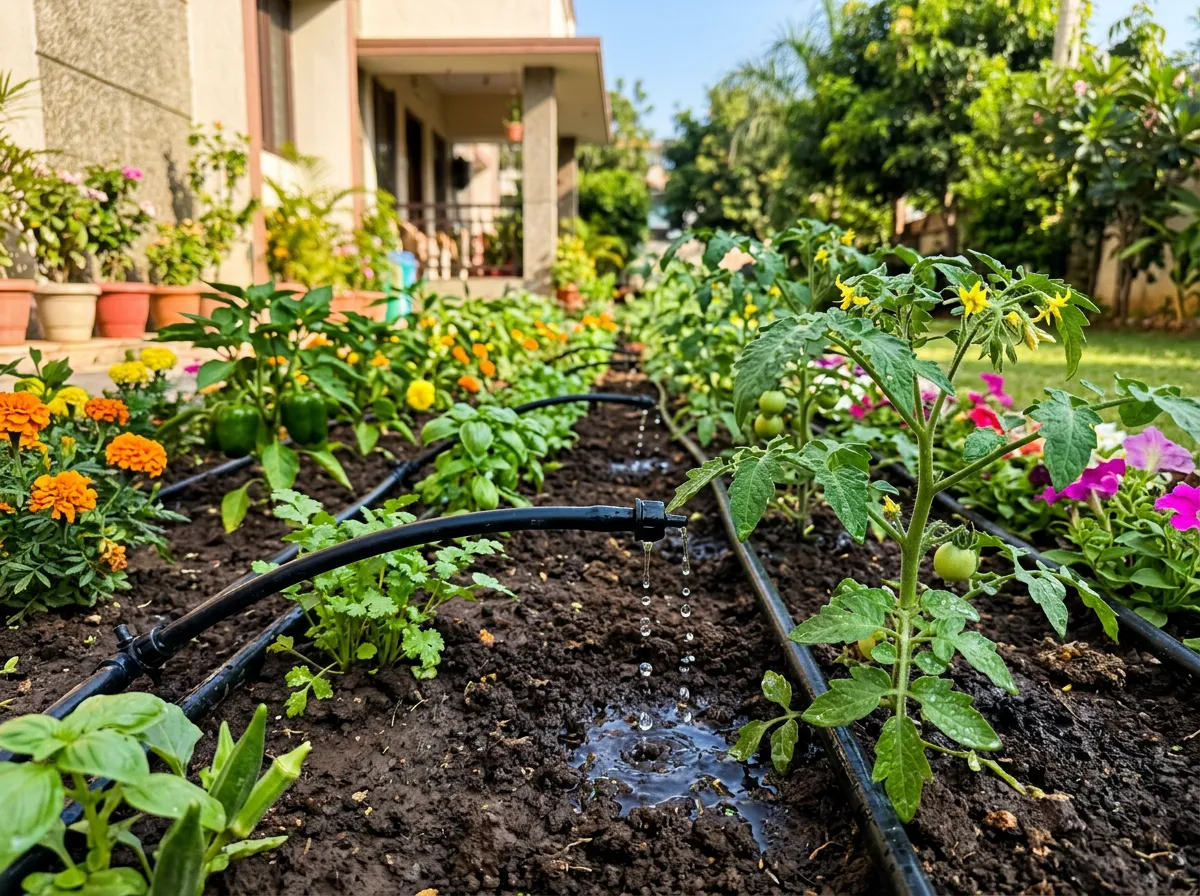
The payback comes from reuse. Treated water piped to a dual-plumbing flushing line and to garden irrigation can offset a large share of a society's fresh-water purchases, which is exactly where a landscaping partner adds value.
- Run the plant continuously; intermittent operation kills the biological culture and triggers odour complaints.
- Schedule a preventive-maintenance contract rather than reacting to breakdowns.
- Install a treated-water storage tank and a separate distribution line for flushing and gardens.
- Test output regularly so reuse stays safe for landscaping and residents.
Need help from a Pune gardening expert?
Get a free on-site consultation and quote from the Gardenist team.
Frequently Asked Questions
Related Gardenist Services
Ready to act on this? These services put it into practice across the Pune region.