
Pune receives around 750mm of rain a year, most of it in the monsoon. This practical guide shows how rainwater harvesting works, whether to recharge or store, how to size a system, and how to keep it maintained.
Why rainwater harvesting suits Pune
Rainwater harvesting means capturing rain where it falls and either storing it for use or letting it soak back into the ground to recharge the water table, instead of letting it run off into drains. Pune receives roughly 750 millimetres of rain in an average year, and the great majority of it falls in the concentrated monsoon months.
That pattern makes harvesting especially valuable here: a few months of heavy rain can top up borewells and storage that then carry a home or society through the long dry season, easing the reliance on tankers.
Recharge or storage: choosing your approach
There are two broad strategies, and many properties use a mix of both. The right choice depends on your goal, your soil, and whether you have a borewell worth reviving.
Storage keeps the water for direct use, while recharge puts it back underground to lift the local water table and borewell yield.
- Recharge: rainwater is filtered and directed into recharge pits, trenches or wells so it percolates down and replenishes groundwater; best where borewells have dropped.
- Storage: rainwater is collected in tanks or sumps for direct use in gardens, washing and, with treatment, other needs; best where you want water on hand.
- Rooftop harvesting: clean runoff from terraces is the primary catchment for both approaches.
- Surface harvesting: runoff from paved and open areas is filtered and used mainly for recharge.
Sizing your system
The water you can harvest depends on your catchment area, the rainfall, and a runoff coefficient that accounts for losses. A useful rule of thumb multiplies the catchment area by the annual rainfall and by that coefficient to estimate the harvestable volume.
Even a modest terrace can yield a surprisingly large amount over a Pune monsoon, which is why sizing the storage tank or recharge structure correctly matters so the system is neither overwhelmed nor underused.
- Measure your true catchment area, usually the roof plan footprint.
- Use roughly 750mm as the Pune annual rainfall basis, applied mostly across the monsoon.
- Apply a runoff coefficient of around 0.8 for clean hard roofs.
- Match tank size to how fast you can use stored water, and size recharge pits to the peak inflow.
Filtration and first flush
The first rain of the season washes dust, leaves and bird droppings off the roof, so a first-flush diverter that discards this initial dirty water protects the quality of everything collected afterwards. A filter then removes silt and debris before the water enters storage or a recharge pit.
Clean inputs are what keep stored water usable and recharge pits from clogging, so filtration is not optional; it is what makes the whole system work over the years.
Maintenance and reuse
A rainwater system needs simple seasonal care: clean the roof and gutters before the monsoon, service the first-flush device, clear the filter media, and periodically desilt recharge pits so they keep percolating.
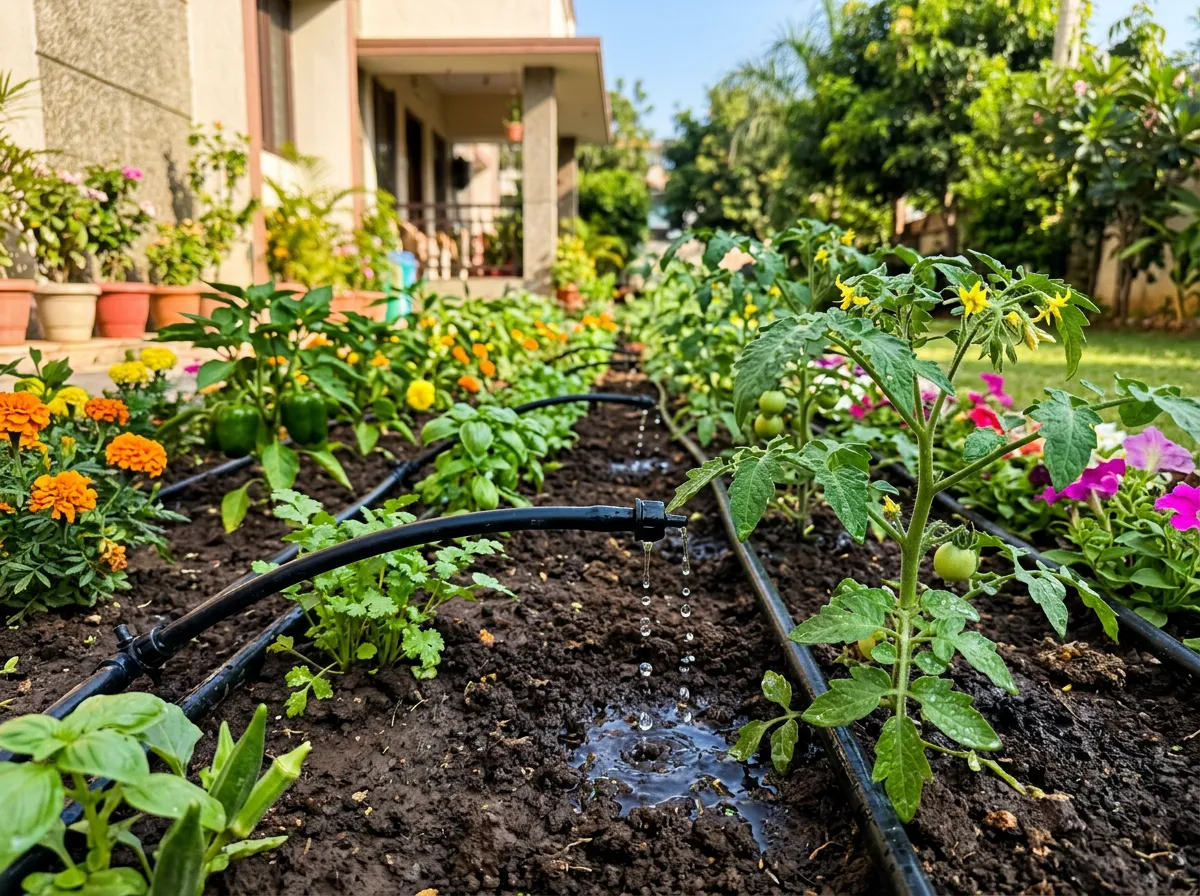
Harvested rainwater is soft and excellent for gardens, and when paired with drip irrigation it stretches even further. Societies often combine rainwater harvesting with STP reuse to build genuine water resilience.
Need help from a Pune gardening expert?
Get a free on-site consultation and quote from the Gardenist team.
Frequently Asked Questions
Related Gardenist Services
Ready to act on this? These services put it into practice across the Pune region.