Sustainable landscaping creates beautiful outdoor spaces that work with nature rather than against it. These core principles help Pune homes and societies build gardens that save water, support wildlife and last for years.
What sustainable landscaping means
Sustainable landscaping is an approach to designing and maintaining outdoor spaces that conserves resources, supports local ecology and stays healthy with minimal inputs. Instead of fighting the local climate and soil, it works with them, so the garden becomes easier and cheaper to maintain over time.
For Pune, that means gardens designed around the monsoon-and-dry-season rhythm, built on healthy soil, planted with species that belong here, and watered mostly with rain and recycled water rather than precious fresh supply.
Right plant, right place
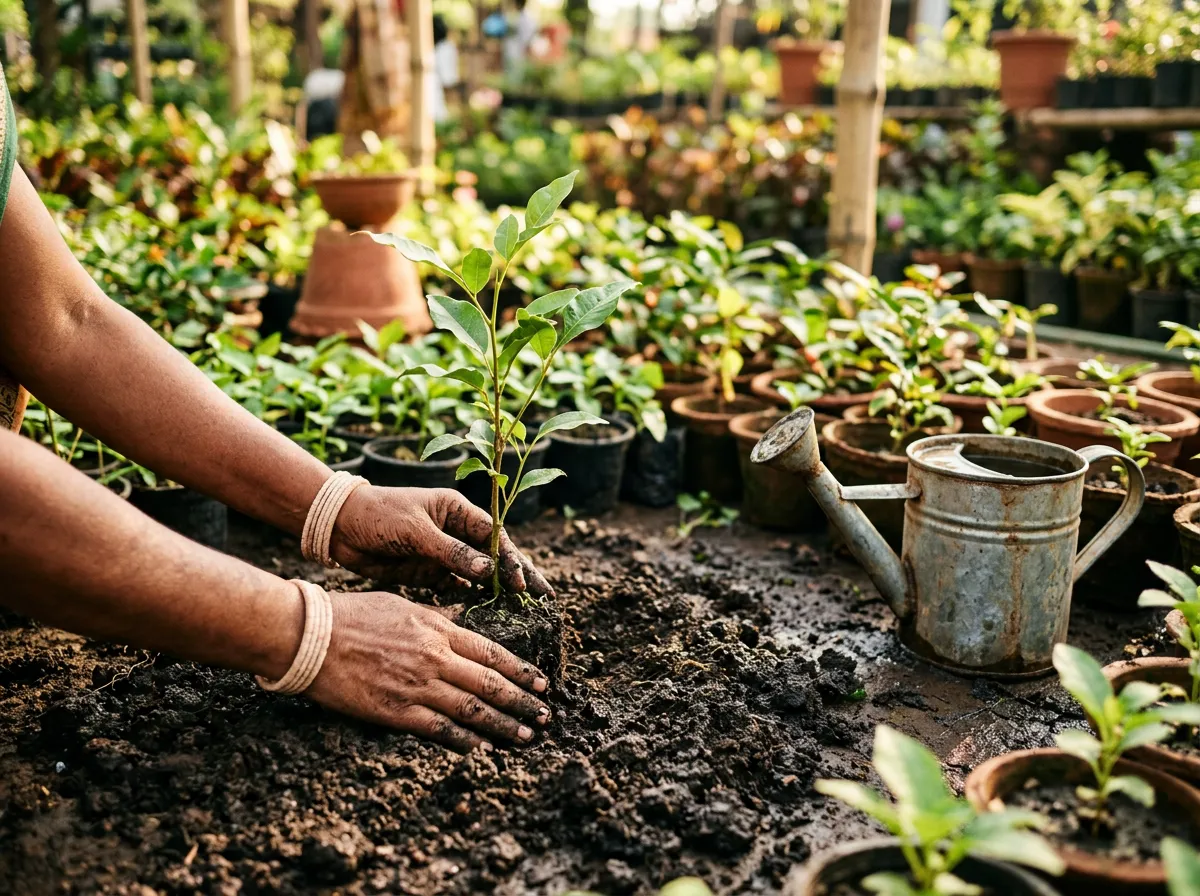
The foundation of a sustainable garden is choosing plants that naturally suit the site's sun, soil and rainfall. Native and well-adapted species need less water, less feeding and less pest control because they already belong in the local environment.
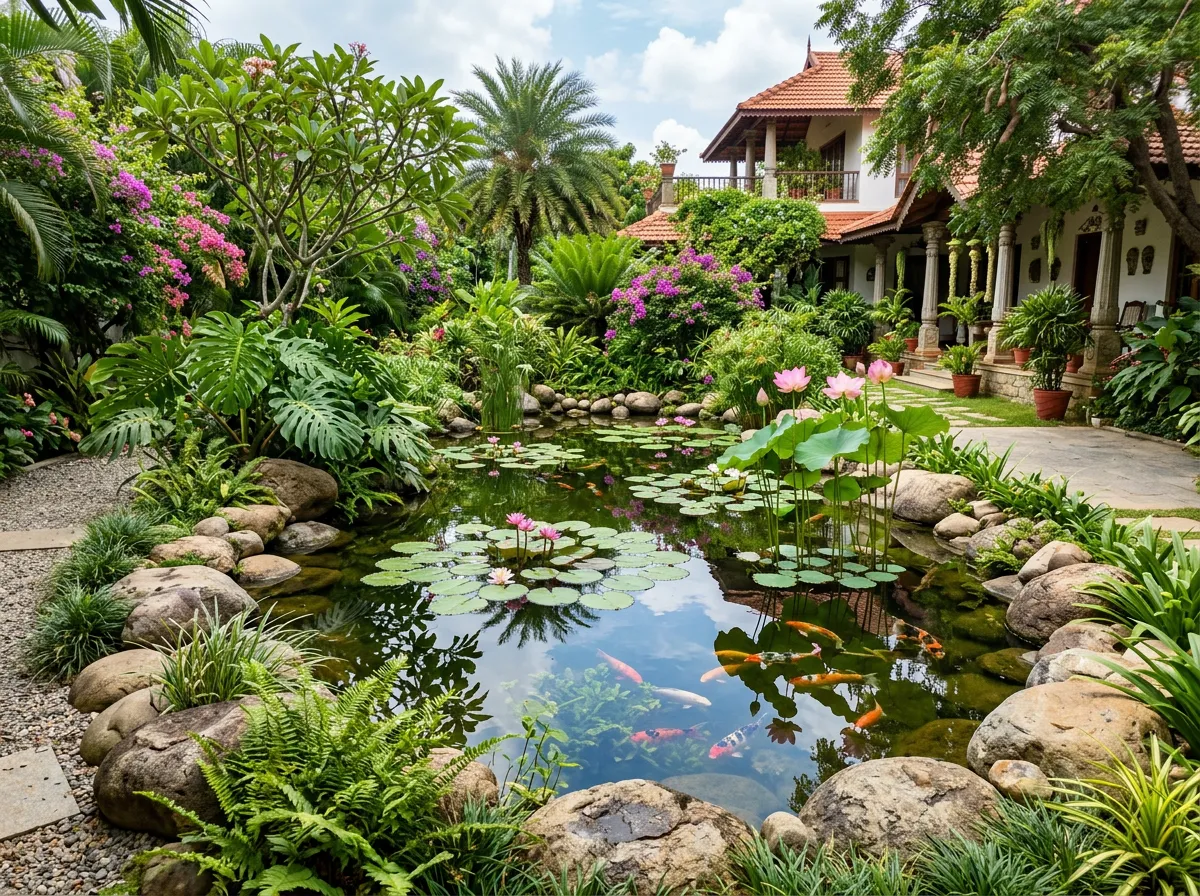
A diverse mix of plants also supports pollinators, birds and beneficial insects, turning the garden into a small piece of living habitat rather than a high-maintenance display.
- Favour native and climate-adapted species that thrive with little intervention.
- Plant a diverse mix to support pollinators, birds and beneficial insects.
- Match each plant to its spot by sun, shade, soil and water need.
- Reduce large lawns in favour of beds, ground covers and trees.
Build healthy soil
Healthy soil is the engine of a sustainable landscape. Soil rich in organic matter holds water, feeds plants naturally and resists erosion, which reduces the need for chemical fertilisers and frequent watering.
Composting garden and kitchen waste on site closes a nutrient loop and cuts what goes to landfill, while mulch protects the soil surface and keeps it alive.
- Add compost and organic matter to feed the soil and improve its structure.
- Mulch beds to retain moisture, moderate temperature and suppress weeds.
- Compost garden and kitchen waste on site to recycle nutrients.
- Avoid unnecessary chemical fertilisers that degrade soil life over time.
Conserve and reuse water
Water is the resource a sustainable Pune garden guards most carefully. The strategy layers several habits: capture rain when it falls, deliver water efficiently, and reuse water that would otherwise be wasted.
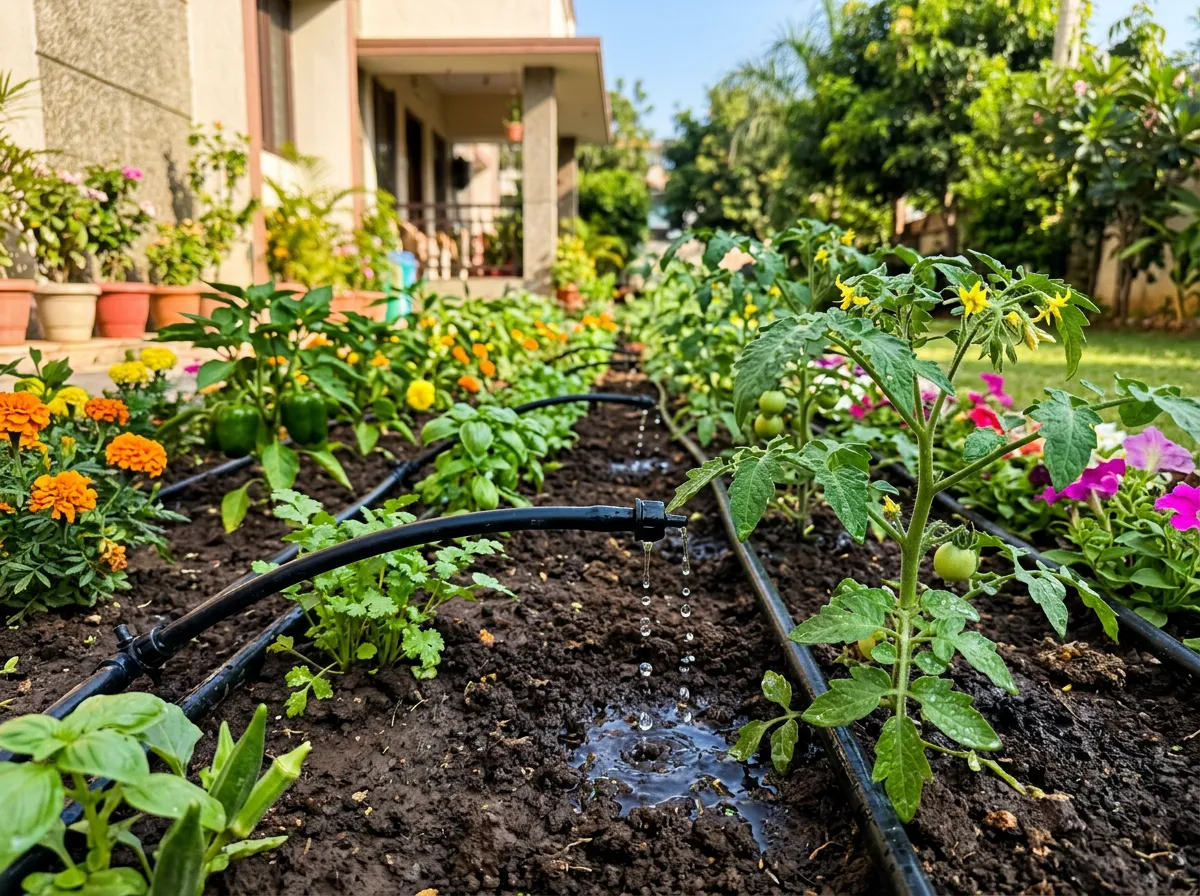
Together, rainwater harvesting, drip irrigation and the reuse of greywater or treated water can supply much of a landscape's needs, sharply reducing reliance on fresh water and tankers.
- Harvest rainwater during the monsoon for use through the dry season.
- Irrigate with drip systems to put water exactly where it is needed.
- Reuse greywater and STP-treated water for non-edible landscaping.
- Group plants by water need so none is over-watered.
Low-impact maintenance
A truly sustainable garden is maintained gently. Managing pests with natural methods, using manual or low-energy tools where possible, and keeping some organic matter on site all reduce the garden's footprint.
The reward is a landscape that gets easier to look after each year as the plants establish and the soil improves, proving that sustainability and beauty go hand in hand.
Need help from a Pune gardening expert?
Get a free on-site consultation and quote from the Gardenist team.
Frequently Asked Questions
Related Gardenist Services
Ready to act on this? These services put it into practice across the Pune region.