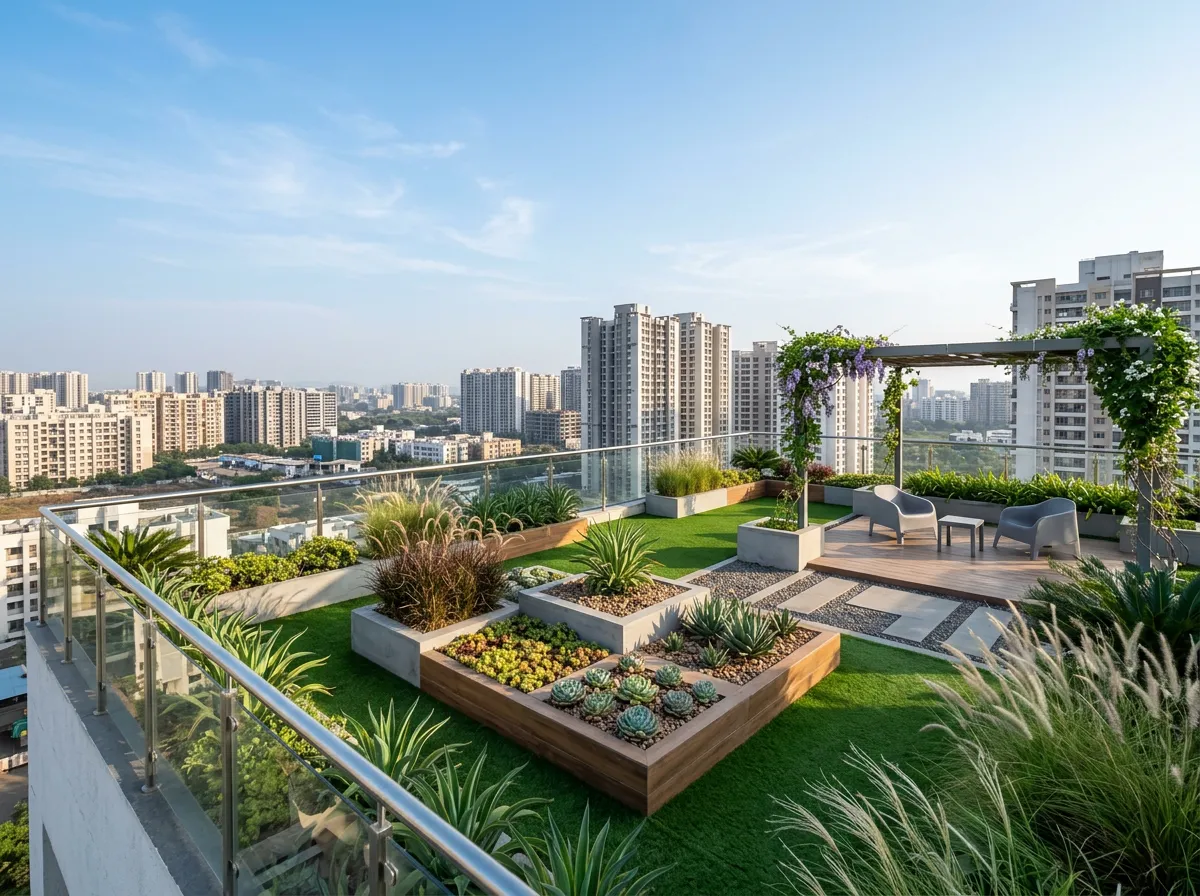
A terrace garden adds real weight to your building, and ignoring load limits is dangerous. This guide explains how to assess load-bearing capacity, reduce weight and garden safely on a Pune rooftop.
Terrace garden load-bearing: why weight matters
A terrace garden is heavier than most people imagine. Soil, water, pots, raised beds, paving, furniture and people all add up, and unlike a bare roof, a garden holds that weight permanently. Every building slab is designed for a certain load, and exceeding it risks cracks, sagging and, in the worst case, structural failure. This is the least glamorous but most important part of planning a rooftop garden.
The weight is not static, either. Wet soil after a Pune monsoon downpour can weigh far more than the same soil in the dry season, and a water tank or pond adds a large concentrated load. Responsible planning always considers the garden at its heaviest, fully saturated state, not its lightest.
None of this should discourage you. Terrace gardens are built safely on rooftops across Pune every day. The point is simply to plan within your slab's limits rather than guess, and to lean toward lightweight choices wherever possible.
How to assess your terrace's load capacity
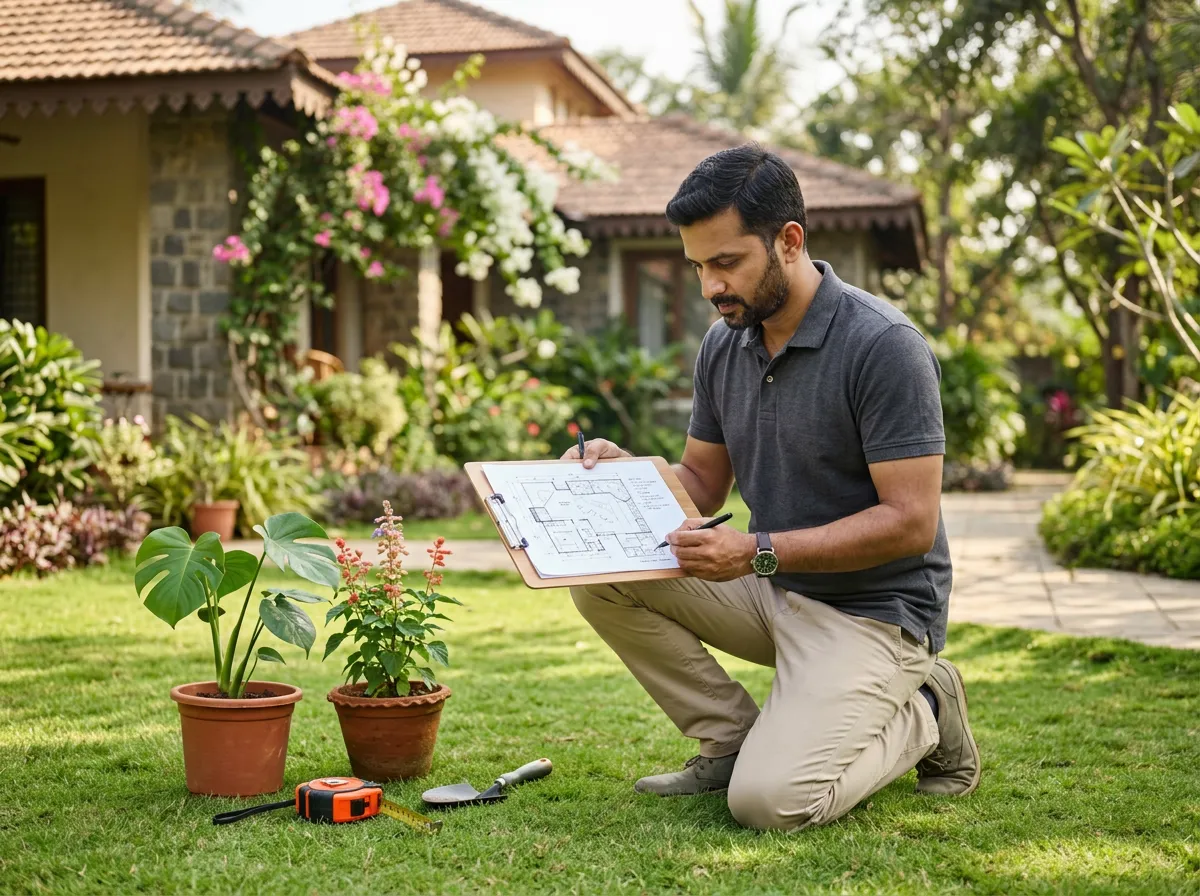
You cannot tell a slab's capacity by looking at it, so the only reliable route is professional input. For anything beyond a handful of pots, it is worth consulting a structural engineer, especially in older buildings or when you plan heavy features like raised beds, water bodies or paving.
An engineer can review the building's design, check the slab and beams, and tell you the safe distributed load your terrace can carry and where the strong points are. This single step removes the guesswork and protects both your home and everyone in it.
- Get a structural engineer to assess the slab before major work
- Ask for the safe load in kg per square metre, both live and dead load
- Identify beam and column lines where heavy items should sit
- Factor in the fully saturated, post-monsoon weight of soil
- Account for water tanks, ponds, paving, furniture and people
- Check society or PCMC rules and permissions for shared terraces
Practical ways to keep the weight down
Most terrace gardens can be made dramatically lighter with sensible choices, which widens what is safely possible on almost any slab. The biggest single saving comes from the growing medium, since a lightweight cocopeat-based mix weighs far less than ordinary or black cotton soil, especially when wet.
Beyond the soil, the material of your containers and structures makes a large difference. Choosing light over heavy at every step lets you keep more plants within the same weight budget.
Distributing weight well is as important as reducing it. Spreading heavy items across the slab and placing the heaviest features over load-bearing walls, beams and columns rather than in the middle of an unsupported span keeps the load safely carried.
- Use lightweight cocopeat and perlite based soil instead of garden soil
- Choose plastic, fibreglass or grow-bag containers over cement and ceramic
- Keep large water features and tanks over structural supports
- Position raised beds along the edges above beams, not mid-span
- Ensure good drainage so soil never stays needlessly saturated and heavy
Safety beyond the slab
Load-bearing is the headline concern, but a safe terrace garden considers a few other risks too. Parapet walls and railings must be sound and high enough, particularly if children will use the space, since gardening often means leaning out to tend plants near the edge. Loose railing planters and pots near the parapet can also fall onto people below, so everything at height must be firmly secured.
Waterproofing ties directly into safety, because water that seeps through a poorly protected slab weakens the structure over time and damages the home below. Root-aggressive plants should never be grown directly on the slab, as roots can penetrate and crack both the waterproofing and the concrete.
Finally, keep access and escape routes clear, ensure any electrical fittings for lighting or pumps are weatherproof and safely wired, and revisit the terrace after every monsoon to check for new cracks or damage. A garden that is safe on day one stays safe only with these periodic checks.
Need help from a Pune gardening expert?
Get a free on-site consultation and quote from the Gardenist team.
Frequently Asked Questions
Related Gardenist Services
Ready to act on this? These services put it into practice across the Pune region.