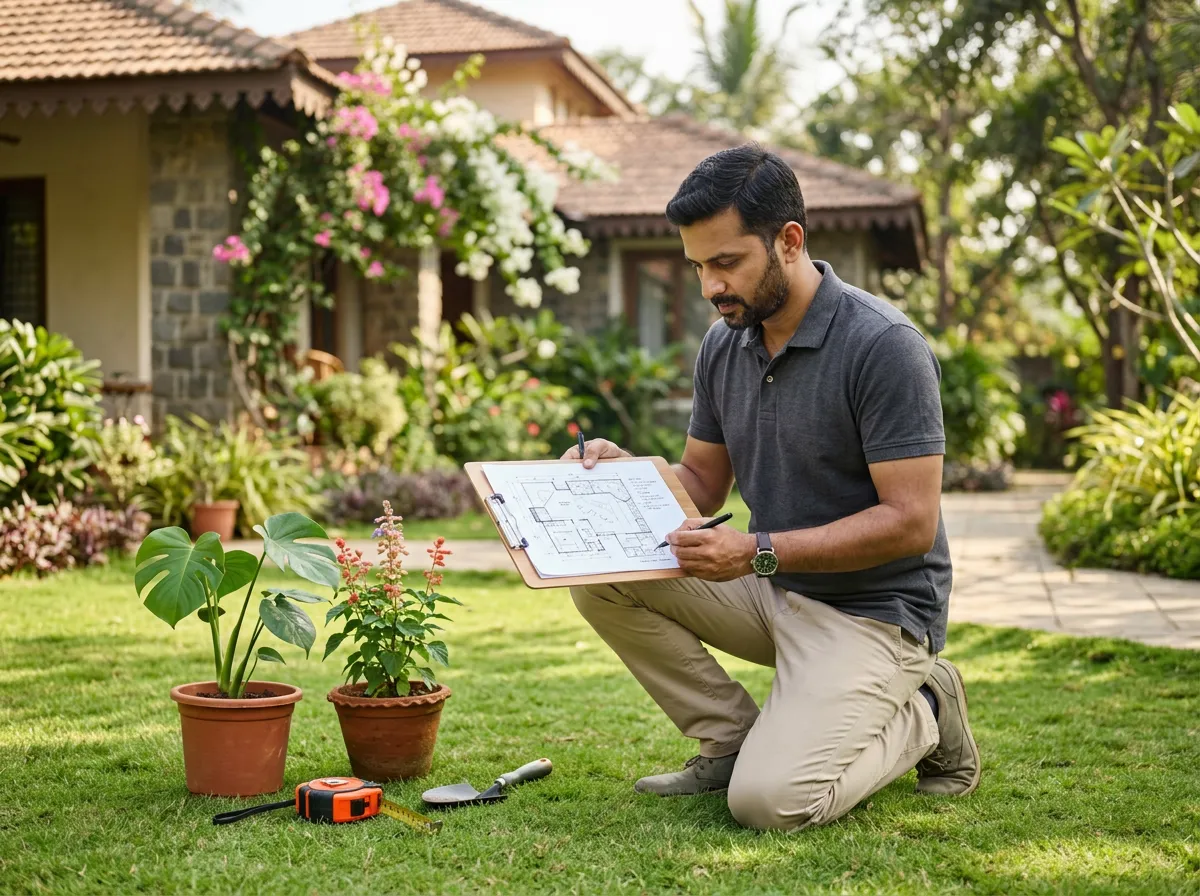
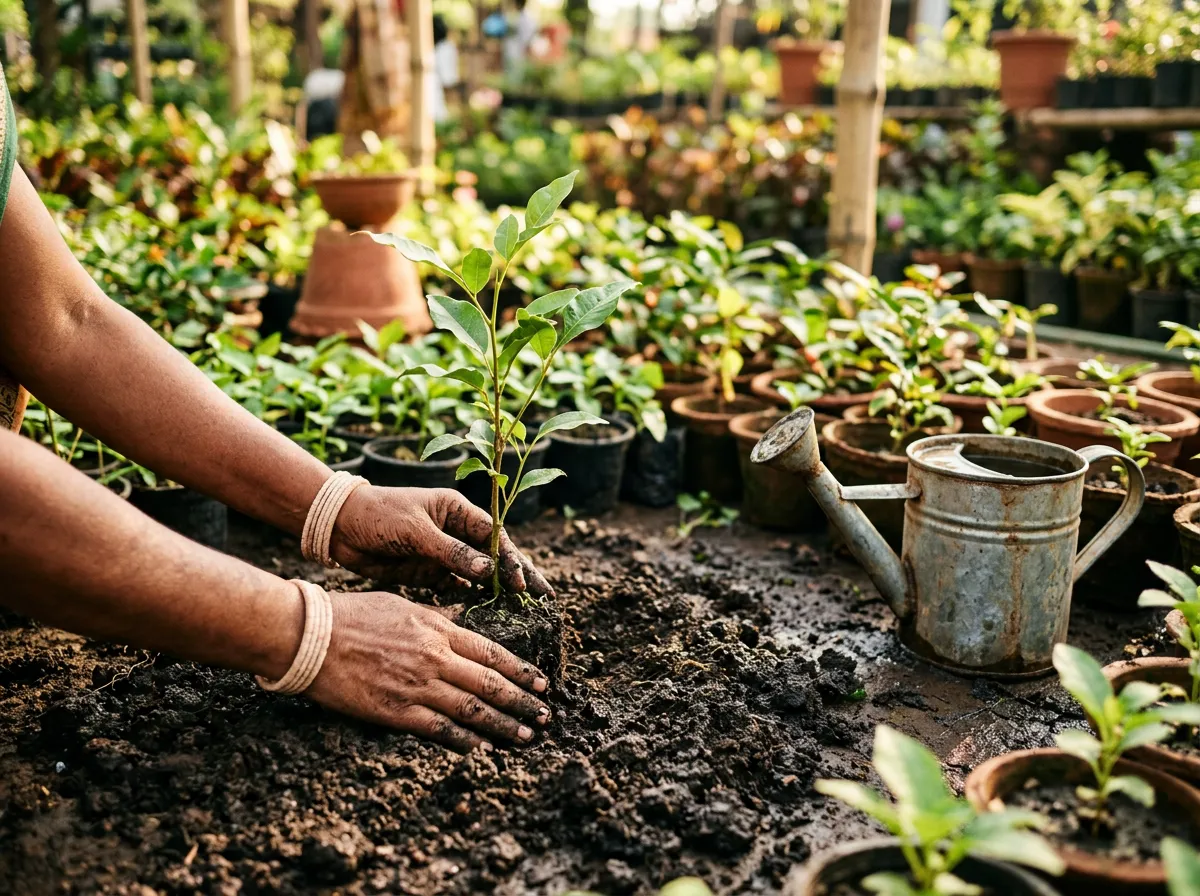
Ordinary soil is too heavy and drains too poorly for a rooftop. Here is how to build a lightweight terrace soil mix that protects your slab, survives Pune's monsoon and still keeps plants thriving.
Why lightweight soil matters for a terrace garden
Soil is heavy, and on a terrace that weight becomes a structural concern. Ordinary garden soil or Pune's black cotton soil is dense, and when saturated during the monsoon it becomes heavier still, adding load your slab may not be designed to carry. A lightweight mix dramatically reduces this dead weight while still supporting healthy plants.
Weight is not the only problem with regular soil on a roof. Black cotton soil in particular swells when wet and cracks when dry, drains slowly and compacts into a hard block in containers, starving roots of air. On an exposed terrace where drainage and root aeration are critical, this behaviour causes waterlogging in the monsoon and bone-dry compaction in summer.
A purpose-built lightweight mix solves all of this at once: it is lighter, it drains freely, it holds moisture without becoming soggy, and it stays loose so roots can breathe. For any Pune terrace garden it is well worth making or buying the right mix rather than shovelling up ground soil.
The three jobs a good terrace soil mix must do
A successful growing medium balances three functions: it must hold enough water to get plants through a hot day, drain excess quickly so roots never drown, and stay airy so roots can access oxygen. Most terrace soil problems trace back to a mix that fails one of these three.
You achieve the balance by combining ingredients that each contribute a different property, rather than relying on any single material. The classic terrace mix layers a water-holding component, a drainage component and a nutrient component together.
- Cocopeat to hold moisture and keep the mix light and fluffy
- Compost or vermicompost to feed plants and add living biology
- Garden soil or red soil in a small proportion for body and minerals
- Perlite, sand or rice husk to sharpen drainage and prevent compaction
- Vermiculite for extra moisture retention in hot, exposed spots
- Neem cake or bone meal as a slow-release nutrient boost
A simple recipe you can mix in Pune
A reliable general-purpose terrace mix uses roughly equal parts cocopeat, compost and a small amount of garden soil, with a couple of handfuls of perlite or coarse sand added per bucket to improve drainage. Cocopeat usually comes as a compressed brick that expands many times its size when soaked, so hydrate it fully before mixing.
You can tune this base for different plants. Succulents and cacti want far more sand or perlite and less cocopeat so the mix drains almost instantly. Leafy vegetables and heavy feeders want extra compost. Flowering plants sit comfortably in the standard mix with a periodic compost top-up.
Because cocopeat is naturally low in nutrients, always pair it with compost and refresh feeding every few weeks during the growing season. The mix is not a one-time thing; it is a living medium that you top up and enrich as plants use it.
Managing your mix through Pune's seasons
A lightweight mix behaves differently across the year, and understanding this keeps plants healthy. In the fierce summer, its moisture-holding cocopeat is a huge advantage, but even so pots dry out fast in 40C heat, so mulching the surface with dry leaves or coco chips slows evaporation and reduces watering.
During the monsoon, the free-draining nature of the mix earns its keep by letting relentless rain pass through instead of waterlogging roots. Make sure pots and beds have clear drainage holes, and lift containers slightly off the slab so water cannot pool beneath them.
Over time, organic components like cocopeat and compost break down and the mix settles and shrinks. Each season, top up with fresh compost and a little more cocopeat, loosen any compacted surface, and your terrace soil will keep performing year after year.
- Summer: mulch the surface to slow evaporation in the heat
- Monsoon: keep drainage holes clear and lift pots off the slab
- Winter: resume regular feeding as growth picks up
- Each season: top up compost and cocopeat as the mix settles
- Anytime: loosen compacted surface soil to keep roots aerated
Need help from a Pune gardening expert?
Get a free on-site consultation and quote from the Gardenist team.
Frequently Asked Questions
Related Gardenist Services
Ready to act on this? These services put it into practice across the Pune region.