Everything a Pune homeowner needs to plan a garden waterfall, from rockery and sheet designs to pump sizing, honest cost ranges, monsoon-safe drainage and the routine that keeps the water clear.
Why a Garden Waterfall Works in a Pune Garden
A garden waterfall brings movement, sound and cool humidity to a space that can otherwise feel static, and in Pune it doubles as a gentle white-noise screen against traffic and society chatter. The falling water masks background sound far better than a still pond, which is why so many bungalow and villa owners across Baner, Kothrud and NIBM ask for one.
Waterfalls also suit our climate. They run hardest in the dry months when the garden most needs the humidity, and during the monsoon you can simply switch the pump off and let the structure sit as a rockery. The trick is designing it so it looks intentional whether the water is running or not.
Popular Waterfall Styles
The right style depends on the scale of your garden and the look of your home. A compact courtyard suits a wall-mounted sheet; a large lawn can carry a full rockery cascade.
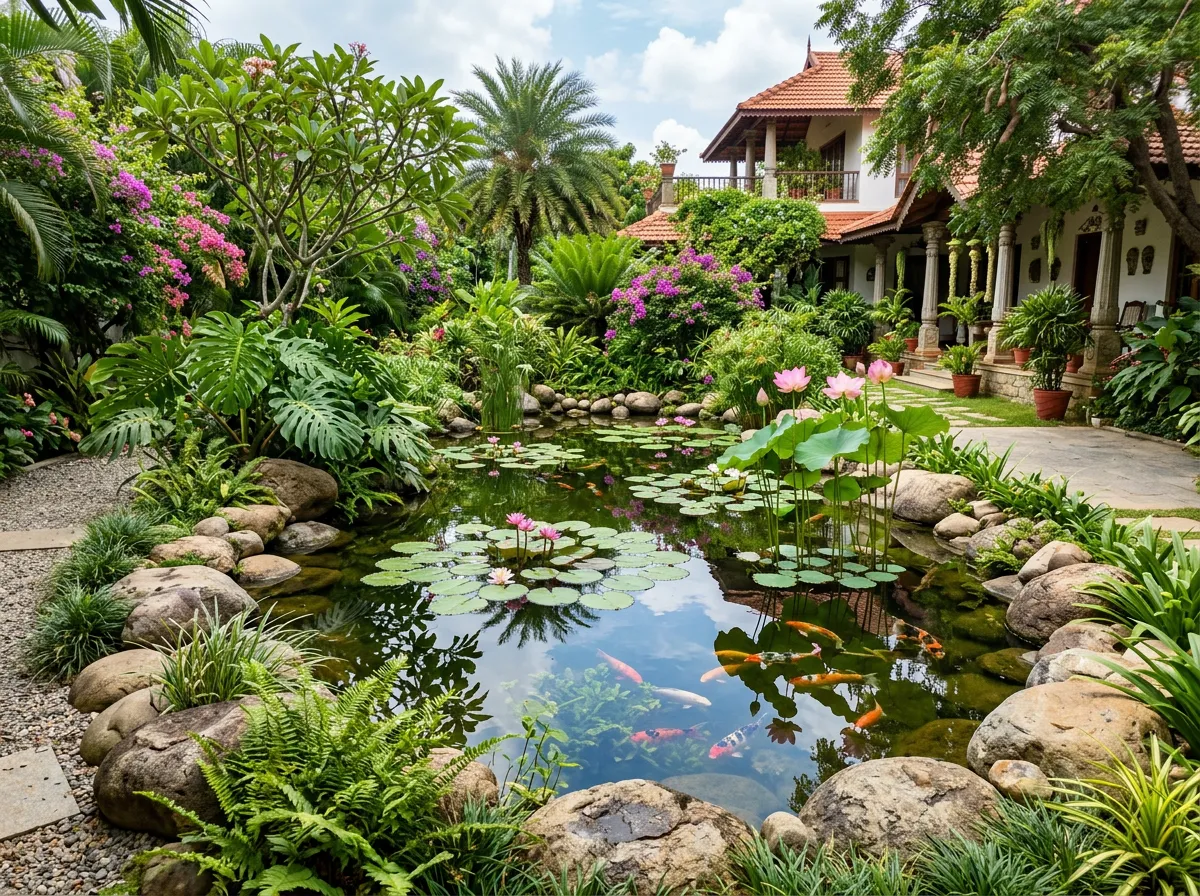
- Rockery cascade: natural boulders and pebbles, water tumbling over several tiers into a pond
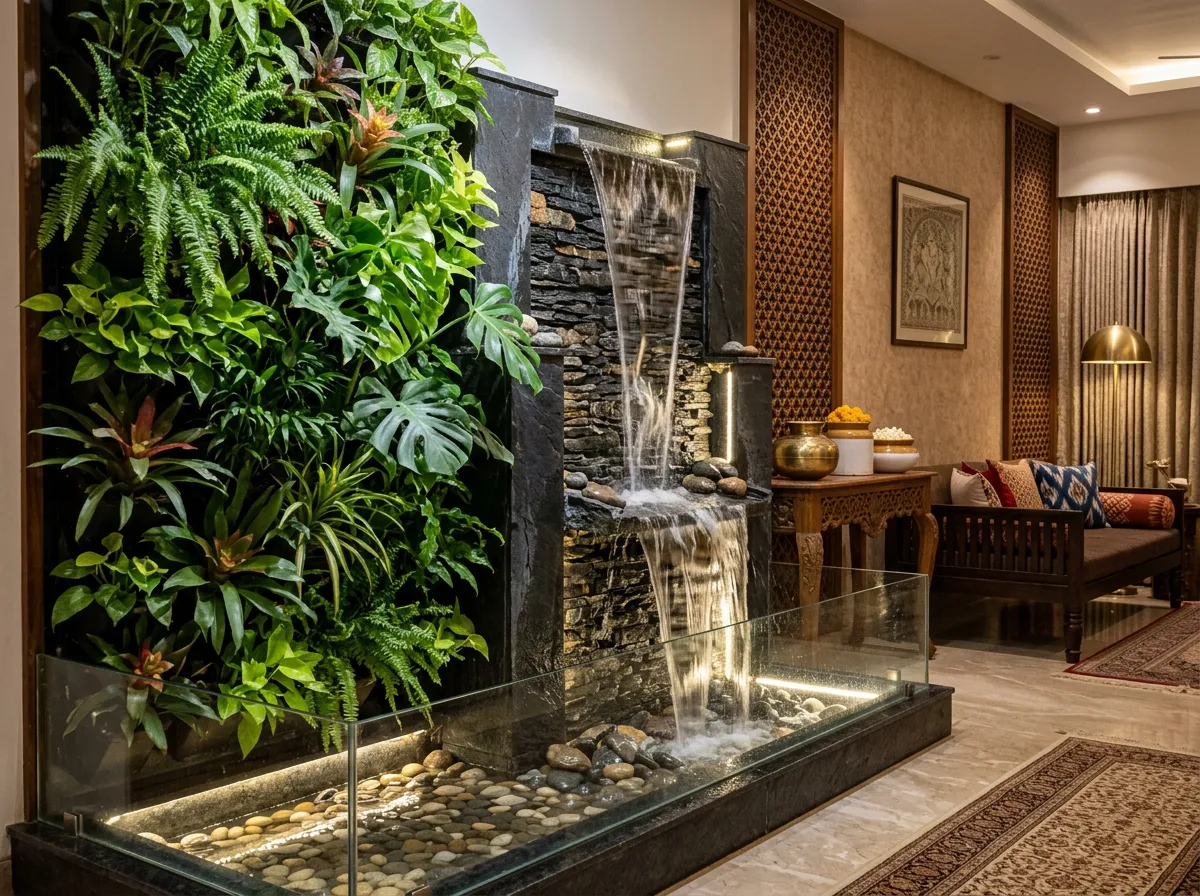
- Sheet or blade fall: a slim slot pours a smooth curtain of water down stone or acrylic
- Wall-mounted spillway: ideal for narrow side-yards and terrace corners with limited depth
- Pondless waterfall: water disappears into a hidden gravel reservoir, safest around children
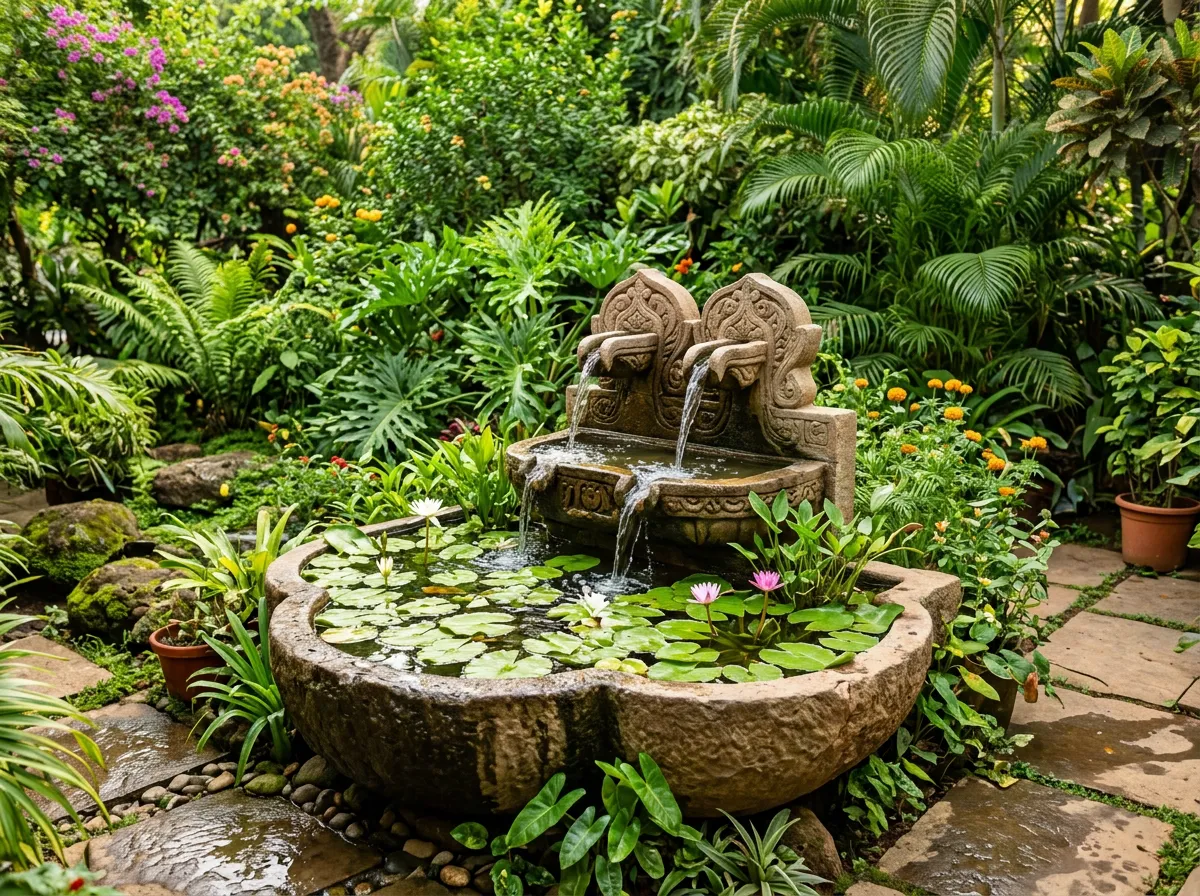
- Bamboo or urn spouts: small, low-cost accents for a Japanese or minimalist theme
What a Garden Waterfall Costs
Costs vary widely with size, stone choice and whether you want a pond at the base. The figures below are typical installed ranges in the Pune market and cover the structure, liner or waterproofing, pump and plumbing.
- Small wall spillway (up to 1.2 m): ₹18,000 to ₹40,000
- Mid-size rockery cascade with small pond: ₹60,000 to ₹1,50,000
- Large multi-tier feature with koi-ready pond: ₹2,00,000 and above
- Submersible pump (2,000 to 6,000 LPH): ₹3,500 to ₹12,000
- Annual running cost of a mid-size pump: roughly ₹2,500 to ₹5,000 in electricity
Getting the Pump and Plumbing Right
Pump flow is the single most common thing people get wrong. As a rough rule, allow about 1,500 litres per hour for every 25 mm (one inch) of spillway width to get a satisfying sheet of water. Undersize it and the fall looks like a dribble.
Use a submersible pump rated for continuous running, fit an isolating valve so you can throttle the flow, and run the cable in conduit to a weatherproof RCD-protected socket. Keep the pump inlet screened so leaves and grit do not choke the impeller.
Monsoon Drainage and Waterproofing
Pune monsoon rain can overtop a pond in an afternoon, so every waterfall needs an overflow. Set a discreet overflow pipe at the maximum safe level and route it to a soak pit or the storm drain, never into the foundation of the house.
For the structure itself, a butyl or EPDM liner outlasts cement in our wet-dry cycle because it flexes instead of cracking. If you do use a masonry basin, waterproof it with a two-coat polymer-modified slurry and let it cure fully before filling. Slope surrounding paving away from the feature so runoff does not carry mud into the water.
Keeping It Clean and Running
A waterfall is low effort if you stay ahead of two things: debris and algae. Skim leaves weekly, and top up for evaporation, which is heaviest in April and May.
- Clean the pump inlet screen fortnightly, more often after storms
- Add a small UV clarifier or use barley-straw extract to hold back green water
- Drain, scrub and refill the basin once a year, ideally in October after the rains
- Switch the pump off during heavy monsoon spells and cover exposed sockets
- Check the liner edges each season for slipped stones or hidden leaks
Need help from a Pune gardening expert?
Get a free on-site consultation and quote from the Gardenist team.
Frequently Asked Questions
Related Gardenist Services
Ready to act on this? These services put it into practice across the Pune region.