A start-to-finish guide to building a garden pond and keeping healthy koi in Pune, covering depth and filtration, realistic costs, monsoon overflow protection and the water-quality routine that keeps fish thriving.
Planning a Garden Pond and Koi Habitat
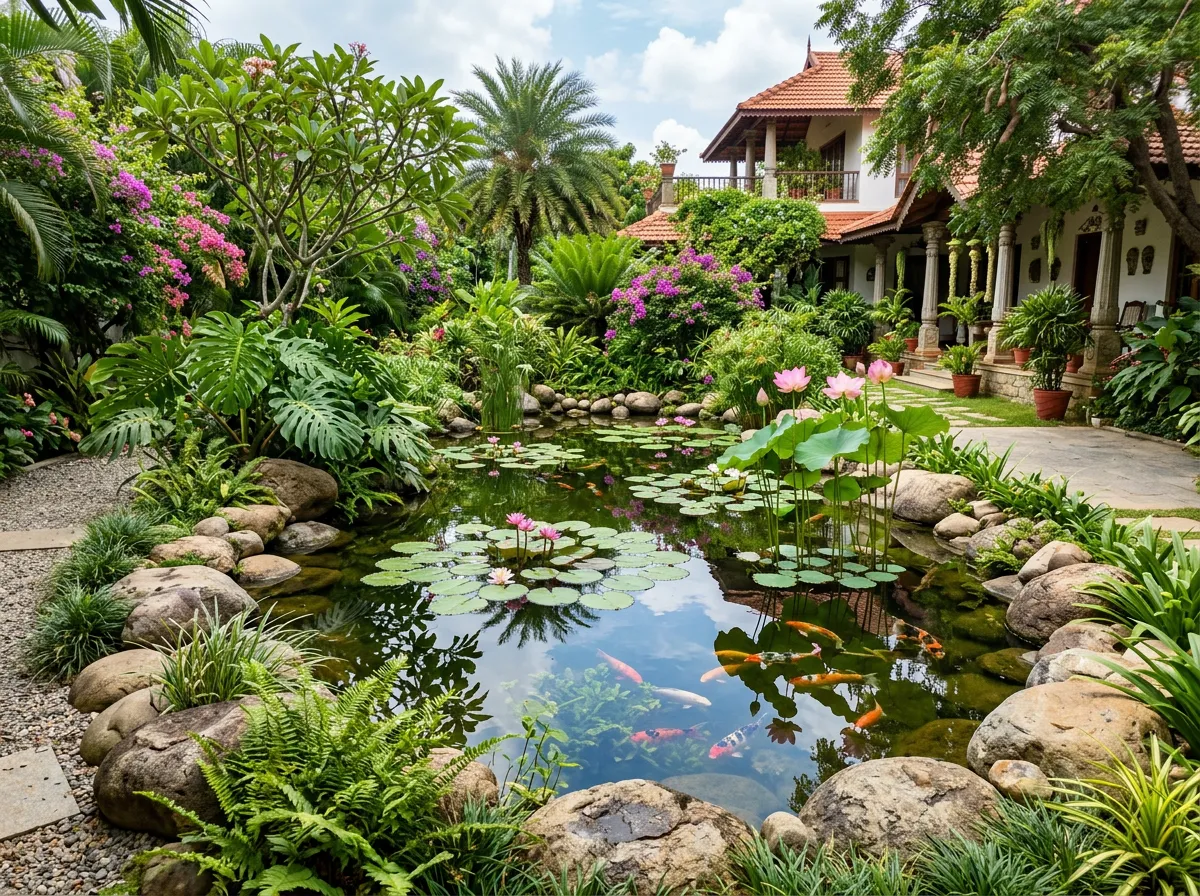
A koi pond is a living system, not just a hole full of water, so the planning stage decides whether you end up with clear water and healthy fish or a green, troubled pond. The two numbers that matter most are volume and depth: koi grow large and produce a lot of waste, so bigger is genuinely easier to keep stable.
For koi in Pune, aim for a minimum volume of around 5,000 litres and a depth of at least 1.2 metres. That depth gives the fish a cool refuge during the April to May heat and keeps the water temperature steady, which is the foundation of healthy koi.
Sizing, Liner and Construction
You can build in concrete or with a flexible liner. Concrete looks permanent but cracks in our wet-dry cycle unless properly reinforced and waterproofed; an EPDM or butyl liner over a protective underlay is more forgiving and faster to install.
- Minimum recommended volume for koi: 5,000 litres, more is better
- Minimum depth: 1.2 m to buffer heat and give fish shelter
- Include a planting shelf 250 to 300 mm deep for marginal plants
- Use EPDM or butyl liner with underlay, or reinforced waterproofed concrete
- Add a bottom drain if you can, it makes waste removal far easier
Filtration and Aeration
Filtration is what keeps koi alive. You need two kinds working together: mechanical filtration to trap solid waste and biological filtration where beneficial bacteria convert toxic ammonia into safer nitrate. Skimping here is the single biggest mistake new pond owners make.
Size the system generously. A good rule is to turn the entire pond volume over through the filter at least once an hour, and add an air pump so the fish and the filter bacteria always have enough oxygen, especially on warm, still Pune nights when oxygen levels fall.
- Mechanical stage: settlement chamber or brushes to catch solids
- Biological stage: media that hosts nitrifying bacteria
- UV clarifier to control green-water algae
- Pump sized to turn over the full volume roughly once per hour
- Air pump with stones for continuous aeration
What a Koi Pond Costs
A koi pond is a bigger commitment than a fountain or waterfall because of the filtration. These Pune ranges cover the pond, filtration and initial fish.
- Small liner pond (up to 3,000 L) with basic filter: ₹60,000 to ₹1,20,000
- Mid-size koi pond (5,000 to 8,000 L) with full filtration: ₹1,50,000 to ₹3,50,000
- Large landscaped koi pond with waterfall: ₹4,00,000 and above
- Quality young koi: ₹500 to ₹5,000 each, premium grades far higher
- Annual running and food cost: roughly ₹15,000 to ₹40,000
Monsoon Overflow and Water Quality
The Pune monsoon is the moment a koi pond is most at risk. A sudden downpour can overflow the pond and wash fish out, while the influx of soft rainwater and runoff can crash the water chemistry. Every koi pond needs a properly sized overflow that carries excess water safely to a soak pit, and a bund or raised edge so muddy garden runoff cannot pour in.
Test the water regularly with a simple kit. Keep ammonia and nitrite at zero, pH stable around 7 to 8, and never overstock or overfeed, since uneaten food is the fastest route to a pollution spike. In the monsoon, feed less as the fish slow down and watch oxygen levels on humid days.
Month-to-Month Koi Care
Koi care in Pune follows the seasons. The fish are most active and hungry in the warm months and quieter when it cools, so adjust feeding and cleaning to match.
- Summer (Mar to May): feed well, watch evaporation and oxygen on hot nights
- Monsoon (Jun to Sep): reduce feeding, check the overflow, protect from runoff
- Post-monsoon (Oct): full filter clean and partial water change
- Winter (Dec to Jan): feed lightly, Pune winters are mild so fish stay active
- All year: test water weekly, remove debris, quarantine any new fish first
Need help from a Pune gardening expert?
Get a free on-site consultation and quote from the Gardenist team.
Frequently Asked Questions
Related Gardenist Services
Ready to act on this? These services put it into practice across the Pune region.