A Japanese Zen garden brings stillness and simplicity to a busy Pune home. This guide covers the core elements, plant choices and practical steps to create an authentic, low-maintenance Zen garden.
What makes a Japanese Zen garden
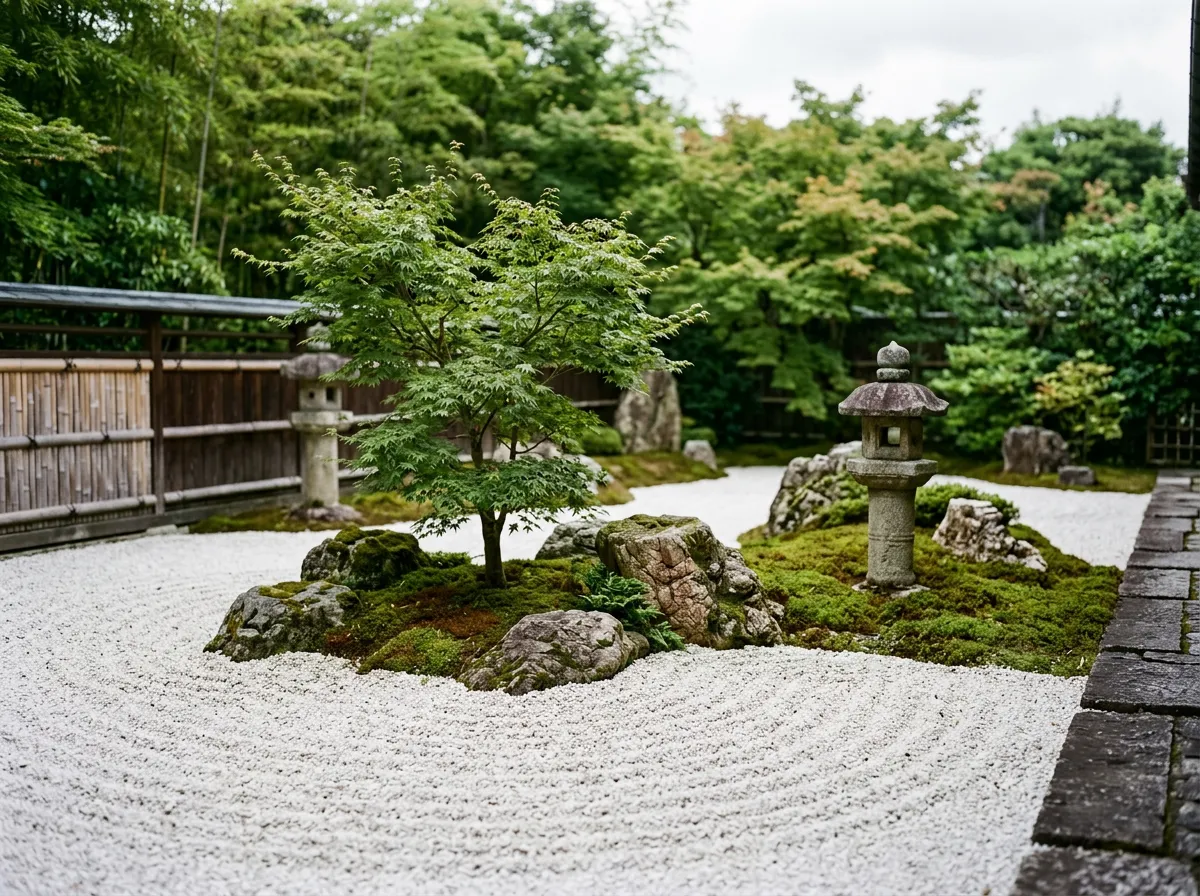
A true Zen garden, or karesansui, is a dry landscape that uses rock, gravel and a few carefully placed plants to represent nature in miniature. It is designed for quiet contemplation rather than colour or abundance.
The style suits Pune homeowners who want a low-water, low-maintenance retreat. With restraint at its heart, a Zen garden thrives on empty space as much as on what you plant.
The core elements to include
Authentic Zen gardens rely on a small, consistent palette of natural materials. Each element is symbolic, so choose and place them deliberately rather than filling the space.
Balance and asymmetry are key. Arrange rocks in odd-numbered groups and leave generous open gravel to suggest water and sky.
- Raked gravel or sand to represent flowing water
- Weathered rocks arranged in groups of three or five
- A stone lantern or water basin (tsukubai) as a focal point
- Moss or a single clipped shrub for restrained greenery
- A simple timber or bamboo screen for enclosure
Choosing plants for Pune's climate
Classic Japanese plants like maples and true moss struggle in Pune's heat and dry spells. Instead, choose local plants that echo the Zen look while surviving the climate.
Keep planting sparse. A Zen garden should feel calm and uncrowded, so a handful of well-placed specimens is enough.
- Clipped ficus or carmona (fukien tea) as bonsai-style forms
- Dwarf bamboo for movement and a soft screen
- Mondo grass or dwarf mother-in-law's tongue for ground texture
- Hardy ferns and creeping fig in shaded, damp corners
Building your Zen garden step by step
Start by clearing and levelling the chosen area, then lay a weed barrier before adding a gravel bed of around three to four inches. Set your largest rocks first as anchors, then work down to smaller stones.
Add a single focal feature such as a stone lantern or bamboo water spout, place your few plants, and finish by raking the gravel into gentle patterns. A compact courtyard Zen garden in Pune can be built for roughly ₹30,000 to ₹1.5 lakh depending on materials.
Keeping a Zen garden calm and tidy
Maintenance is light but regular. Rake the gravel to refresh the patterns, pull the occasional weed and lightly trim your shrubs to hold their shape.
During the Pune monsoon, gravel can shift and weeds spread faster, so a quick weekly tidy keeps the garden serene through the wet months.
Need help from a Pune gardening expert?
Get a free on-site consultation and quote from the Gardenist team.
Frequently Asked Questions
Related Gardenist Services
Ready to act on this? These services put it into practice across the Pune region.