A clear comparison of the main garden pathway materials used in Pune, weighing looks, cost per square foot, grip in the monsoon and long-term upkeep so you can pick the right surface.
Choosing Garden Pathway Materials for Your Space
A pathway does more than connect two points. It sets the rhythm of a garden, protects the lawn from wear and keeps feet clean during the monsoon. Choosing the material well means balancing how it looks against how it drains, how much it costs and how slippery it gets when wet.
In Pune the wet-season grip is the deciding factor for many homeowners. A surface that looks stunning in a magazine can become treacherous under monsoon algae, so we always weigh texture alongside appearance.
The Main Material Options
Each material has a personality. Natural stone reads as timeless, gravel as informal and cottagey, poured concrete as sharp and modern.
- Natural stone (Kota, Shahabad, sandstone): durable, handsome, needs a textured finish for grip
- Concrete pavers and interlocking blocks: consistent, budget-friendly, easy to lift and relay
- Gravel or pebble: excellent drainage, cheap, but travels and needs edging
- Clay brick: warm colour, good grip, classic in heritage and cottage gardens
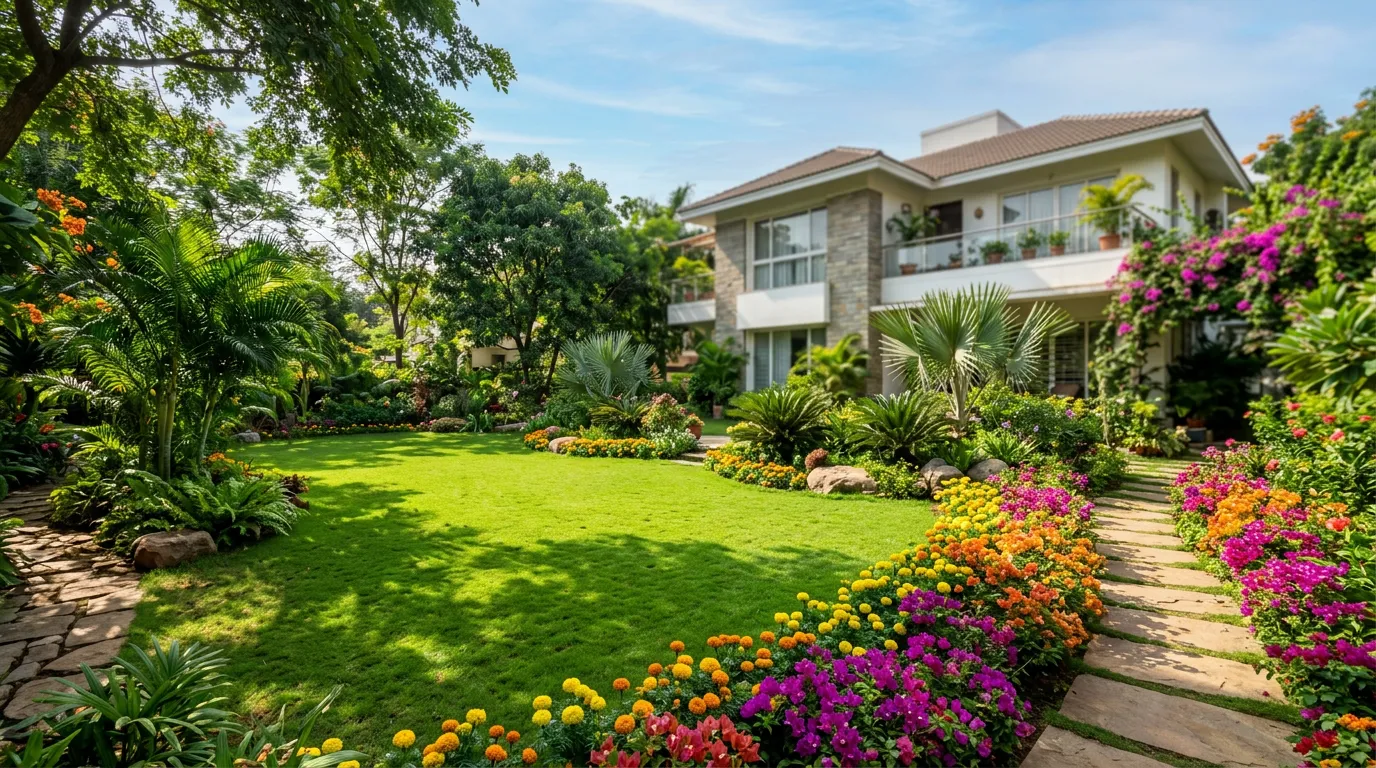
- Stepping stones set in grass or gravel: informal, low cost, lets water soak straight through
- Poured or stamped concrete: seamless modern look, but the least permeable option
Cost Per Square Foot in Pune
Pathway budgets are usually quoted per square foot including a compacted base and laying. These ranges reflect current Pune rates and shift with stone quality and access.
- Gravel or pebble path: ₹80 to ₹200 per sq ft
- Concrete pavers and interlocking blocks: ₹120 to ₹300 per sq ft
- Kota and Shahabad stone: ₹150 to ₹350 per sq ft
- Premium sandstone and granite: ₹350 to ₹700 per sq ft
- Stamped or exposed-aggregate concrete: ₹200 to ₹450 per sq ft
Drainage and Grip for the Pune Monsoon
The base matters as much as the surface. Build any path on a compacted sub-base of crushed stone with a slight cross-fall of about 1 in 50, so water sheets off to the garden rather than pooling. Poor bases are why paths sink and rock within a couple of seasons.
For grip, choose a leathered, flamed or naturally riven stone finish rather than a polished one, and keep mortar joints filled to stop weeds. Permeable options such as gravel and open-jointed pavers let the intense monsoon rain soak away on the spot, easing the load on your drains and recharging groundwater.
Maintenance by Material
Every path needs some care, but the amount varies a lot. Gravel is cheap to lay but needs topping up; stone is costly upfront but nearly maintenance-free.
- Stone and pavers: pressure-wash off monsoon algae once a year, re-sand joints as needed
- Gravel: rake level monthly and top up every couple of years
- Brick: brush weeds from joints and reseal against moss if it stays shaded
- Concrete: seal every two to three years to resist staining and surface algae
- All paths: keep an edge restraint so the surface does not spread into beds
Need help from a Pune gardening expert?
Get a free on-site consultation and quote from the Gardenist team.
Frequently Asked Questions
Related Gardenist Services
Ready to act on this? These services put it into practice across the Pune region.